



Reliable series production of cylinder blocks

Productivity, precision, and process stability have always been key drivers in the manufacture of vehicle components. Whether conventional combustion engines or hybrid and electric drive concepts—manufacturers and their suppliers must produce complex components with minimal tolerances and reproducible quality in a cost-effective manner. Horizontal machining plays a key role here, having long since proven itself as the backbone of highly automated series production. Many central components in vehicle construction are predestined for machining on horizontal machine concepts: cylinder blocks and heads may be losing importance in the long term, but they remain prime examples of horizontal machining. In electromobility, the different housings for motors or power electronics place similar demands on production. Due to the high importance of horizontal machine concepts, DMG MORI has built up a wide range of products in this discipline. One of the highlights in this area is the NHX 8000. Now in its fourth generation, it once again sets standards in terms of machining performance, precision, and automatability.
Perfect chip removal and multi-sided machining
The main advantage of horizontal milling and drilling is that chips fall down unhindered and can be easily removed. With travel distances of 1,400 x 1,200 x 1,350 mm, the NHX 8000 4. Generation offers sufficient space to reliably perform machining on even large cylinder blocks. This is because, especially with aluminum, gray cast iron, and vermicular graphite cast iron components, the horizontal alignment of the spindle minimizes chip accumulation in the deep pockets and bores of complex workpieces. Reliable machining also increases tool life, which contributes to cost-effectiveness as does multi-sided machining. It reduces re-clamping operations and thus also non-productive times, and also facilitates the machining of components with low positional and reference tolerances. Cylinder blocks and heads, for example, have numerous bores, sealing surfaces, and threads that require high-precision form and position tolerances on different sides. The design and the resulting structural advantages therefore give horizontal machining centers a strategic added value over vertical machine concepts.
Maximum machine rigidity for roughing or finishing
Horizontal machining centers such as the NHX 8000 4. Generation impress with their enormous machine rigidity, which enables them to handle high cutting volumes. This is particularly beneficial when machining large castings with numerous flat surfaces and deep bores. At the same time, the stable design ensures precise manufacturing with high repeat accuracy. This means that even the most demanding bores and fits can be achieved with consistent quality across large series. The spindle range of the NHX 8000 4. Generation includes both spindles with 16,000 rpm and a powerMASTER spindle with a torque of 1,413 Nm, allowing the machine to demonstrate its strengths in all areas of application.
Increased productivity through automation across the entire shop floor
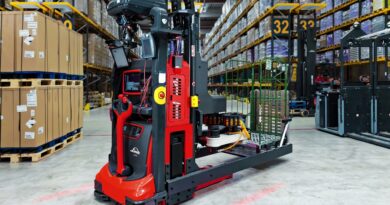
Beyond its design advantages, the NHX 8000 4. Generation proves to be the ideal basis for automated production. Rotary pallet storage or linear pallet pools (LPP) are ideal for machining cylinder blocks. The latter can link up to eight machines, have space for a maximum of 99 pallets, and have up to five make-ready positions that can be operated either manually or, optionally, automatically. Other process steps can also be integrated into an LPP, such as a laser station that marks the components for further tracking. Fully automated manufacturing solutions enable users to prepare new orders during production hours while maximizing spindle runtime. If required, driverless transport systems such as the AMR series from DMG MORI create additional space. They supply the machines with new tools fully automatically and take care of chip removal.
A well-thought-out automation approach ultimately preserves production flexibility. This is because the industry has been undergoing a shift away from conventional drives toward hybrid and electric vehicle technologies for several years now. In this transformation process, it is important to design production systems in such a way that they can reflect technological changes without losing efficiency. Horizontal machining centers offer a decisive advantage here: they combine series productivity with structural adaptability. New component geometries, modified clamping concepts, or changed quantities can be integrated into existing system architectures without having to rebuild entire production lines.

Partner for sustainable transformation
With the NHX 8000 4. Generation as an example, DMG MORI underscores its claim to support the mobility environment as a holistic solution provider. The machine tool manufacturer combines the horizontal machining center with the optimal automation and numerous digital solutions that enable end-to-end networked production with intelligent monitoring and transparent documentation. This philosophy supports sustainable transformation and creates future-proof structures for competitive manufacturing in the mobility sector.